
Zion Hiking Preparation, Permits & Safety
Hiking in the Zion area is a unique and rewarding experience. Because the park features deep canyons, dry desert mesas, and fast-flowing rivers, hikers face conditions that are very different from traditional mountain environments. Proper preparation is essential to stay safe and protect the park’s fragile ecosystem. This independent guide details permit rules, heat and water logistics, and key safety codes.
1. Trail Permit Systems (Angels Landing & Wilderness)
To protect park trails from overcrowding and erosion, the National Park Service requires permits for several hikes. You must apply for these permits in advance via the official park lottery systems on recreation.gov:
Angels Landing Permits & Chain Prep
A permit is required year-round to hike the final chain-assisted section of Angels Landing (from Scout Lookout to the summit). Permits are issued via two lottery systems: a seasonal lottery and a day-before lottery on recreation.gov.
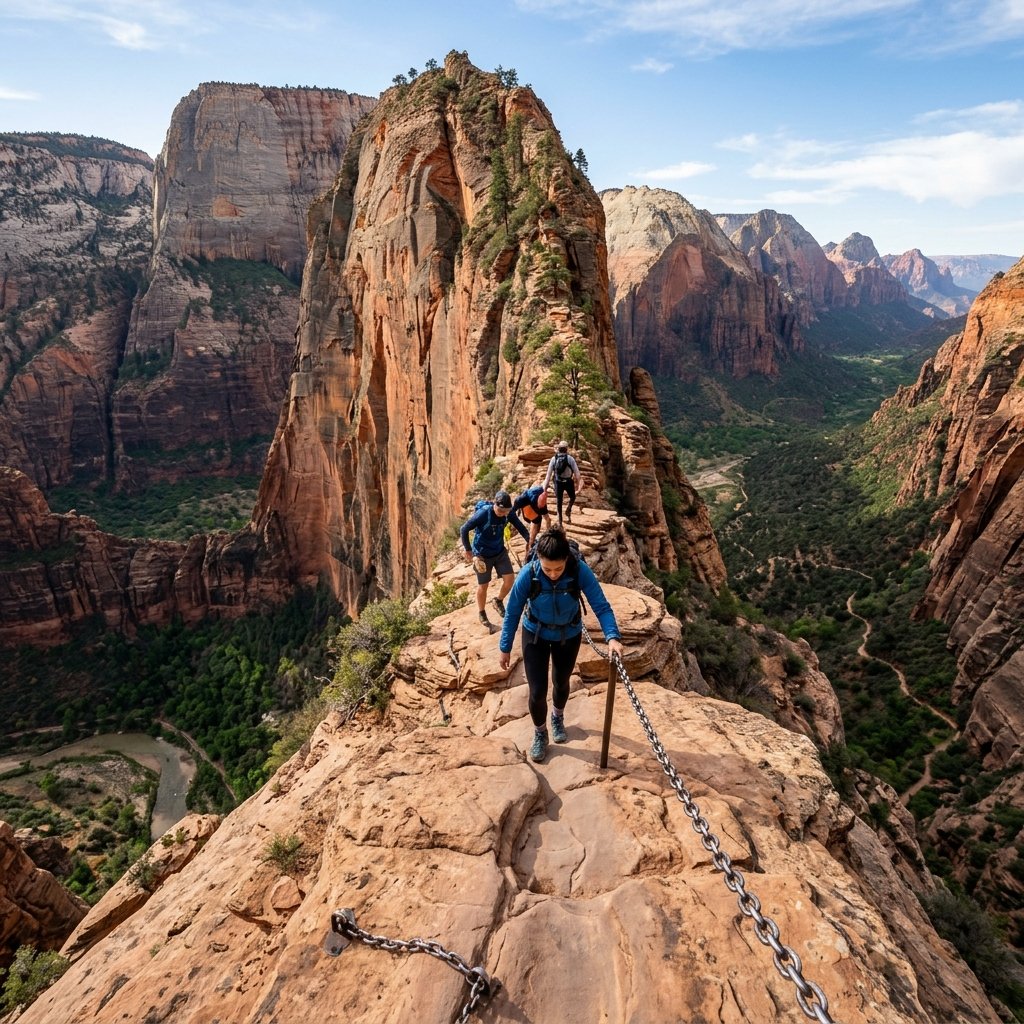
Ascending the final half-mile spine of Angels Landing requires more than just a permit; it demands correct mental and physical preparation. Hikers must traverse a narrow sandstone ridge with sheer 1,000-foot drop-offs on either side. A series of cold steel chain links, anchored directly into the rock face by the National Park Service, serves as the only safety barrier. Grip friction is critical. When the steel is cold or sweat-slicked, wearing lightweight, sticky-grip gloves can prevent slips. Furthermore, your footwear is your life-line. We highly recommend hiking boots or shoes equipped with sticky rubber outsoles (such as Vibram Megagrip or equivalent trail compounds) to ensure maximum traction on the polished, dusty sandstone slopes.
Wilderness Permitting
Permits are required for all overnight backpacking trips, and for challenging slot canyon routes like The Subway (Left Fork of North Creek) and the Virgin River Narrows “Top-Down” 16-mile hike. Wading into the Narrows “Bottom-Up” (from Stop 9) does not require a permit.
2. Desert Hydration & Salt Replacement
The combination of high elevations (Zion Canyon is at 4,000 feet, plateaus are above 6,500 feet), hot temperatures, and dry air accelerates dehydration rapidly. You will sweat out moisture without realizing it because it evaporates instantly in the dry air.
- Water Ratio: Carry at least 1 liter of water for every 2 hours of hiking. For strenuous summer hikes, pack 3 to 4 liters of water per person.
- Electrolytes: Drinking too much plain water without replacing lost salts can lead to hyponatremia (water intoxication). Always pack salty snacks (pretzels, chips, nuts) or add electrolyte tablets to your water.
- Symptoms to Watch: Headache, dizziness, muscle cramps, and extreme fatigue are early signs of dehydration or heat exhaustion. Stop, find shade, rest, and drink water immediately.
3. Flash Flood Hazards & Canyon Preparation
Flash floods are a major danger in Zion’s slot canyons. A rainstorm occurring miles away can send a wall of mud, logs, and water rushing down a slot canyon (like the Narrows or the Subway) within minutes, leaving hikers with no escape route.
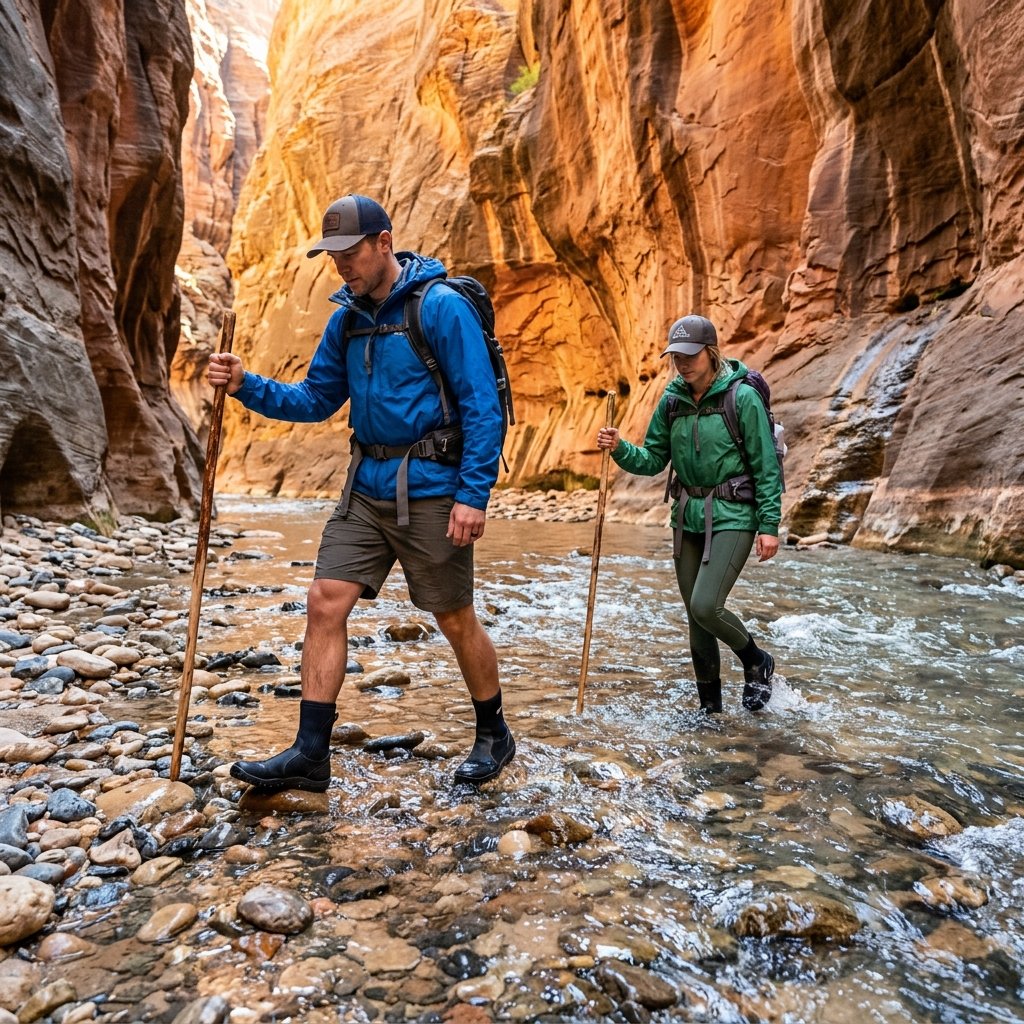
Flash Flood Safety Rules: Always check the daily Flash Flood Rating at the Visitor Center or via official weather sources before entering a canyon. The ratings are: Low, Moderate, High, and Expected.
- Never enter a canyon if rain is forecast anywhere in the region.
- Be aware of changing conditions: muddy water, a sudden roar from upstream, or rising water levels are signs of a flash flood. Seek high ground immediately.
- River water also contains toxic cyanobacteria (blue-green algae). Do not submerge your head or drink the water, even if filtered.
4. Trail Etiquette & Leave No Trace (LNT)
Help preserve the beauty of Zion for future generations by practicing proper trail etiquette and following Leave No Trace principles:
- Yield to Uphill Hikers: Downhill hikers should step aside to yield the trail to hikers climbing uphill, as climbing requires more momentum and effort.
- Pack It In, Pack It Out: Never discard trash, fruit peels, or food waste on the trail. Pack all garbage out of the park. Use designated restrooms; carry human waste bags (WAG bags) if backpacking.
- Do Not Feed Wildlife: Zion’s rock squirrels and mule deer are wild animals. Feeding them makes them aggressive and dependent on human food, and they carry diseases. Keep your distance.
- Respect the Sandstone: Do not carve your name, paint, or deface the red sandstone cliffs. Graffiti is illegal and causes permanent damage.
Zion Hiking FAQs
What should I do if I don’t get an Angels Landing permit in the seasonal lottery?
If you miss the seasonal lottery, you can apply for the Day-Before Lottery on recreation.gov. The lottery opens daily at 12:01 AM and closes at 3:00 PM Mountain Time for permits to hike the following day. If you still do not secure a permit, you can hike up to Scout Lookout without a permit, which offers similar canyon views.
Are there water refilling stations along the trails?
Potable water stations are only located at major canyon shuttle stops (the Zion Canyon Visitor Center, the Zion Museum, the Zion Lodge, The Grotto, and the Temple of Sinawava). There are no water stations on the actual hiking trails. You must carry all your water with you in a backpack.
Can I bring my dog on Zion hiking trails?
No. Pets are not allowed on any of Zion’s unpaved hiking trails, on the shuttle buses, or inside public buildings. The only trail where pets are allowed (on a leash) is the paved Pa’rus Trail, which begins at the Zion Canyon Visitor Center. Check our directory for pet boarding services near the park.